
Official UN Tourism Methodology · The Five A’s
Tourism Product Development
Strategic Product Roadmaps for Boutique Hotels, Lodges, and Inbound Operators. A strong tourism product is not built on guesswork: it requires an exhaustive diagnostic audit of internal enterprise resources (human talent and physical assets) alongside the broader territorial ecosystem (local natural/cultural assets, public authorities, and community organizations). We develop actionable, institutional-grade product development roadmaps that allow your team to build distinctive offerings, halt economic leakage, maximize community benefit retention, and command formidable negotiation power with institutions and commercial distribution channels.

Pillar 01 — Economic Leakage & Asset Cohesion
The What: Halting Economic Leakage Through Differentiated Circuits
Most adventure travel and ecotourism products suffer from acute economic leakage: travelers visit a territory, but because supply networks are fragmented, the revenue exits the community while the local infrastructure and ecosystem bear the wear and tear. This service restructures an MSME’s offerings using the Official UN Tourism Product Methodology and the structured synthesis of the “Five A’s”, turning disconnected points of interest into sovereign, high-retention commercial circuits.
01. Spatial & Resource Audits
Attractions & Accessibility
Conducting spatial and resource audits to inventory tangible physical assets, biodiversity corridors, and intangible regional heritage codified into structured, defensible product layers.
02. Supply Chain Integration
Amenities & Activities
Connecting wilderness accommodation and local transportation with community-led guided activities, replacing third-party middleman dependency with authentic local partnerships.
03. Commercial Rails
Economic Retention
Engineering the commercial rails that allow an inbound operator or boutique hotel to sell immersive, regenerative circuits sourcing local food, crafts, and guidance, keeping visitor spend in the community.
Institutional Evidence & Standard: UN Tourism (UNWTO)
“Destination competitiveness is no longer determined by raw natural endowments alone, but by a territory’s capacity to package interconnected cultural and ecological assets into coherent experiential products. When destinations replace fragmented retail offerings with structured territorial products, visitor retention increases while per-capita local economic leakage drops significantly.”
— UN Tourism (formerly UNWTO), Handbook on Tourism Product Development & Sustainable Territorial Policy Guidelines.
Pillar 02 — Methodology & The Five A’s
The How: The UN Tourism “Five A’s” Synthesis
We operationalize the official UN Tourism product methodology into a structured synthesis of the “Five A’s” specifically calibrated for tourism MSMEs—boutique hotels, wilderness lodges, and inbound tour operators. We translate macro-level planning frameworks into nimble, field-ready commercial tools.
Process Flow & Supply Integration
Figure 1.0: End-to-End Tourism Product Synthesis & Local Retention Matrix
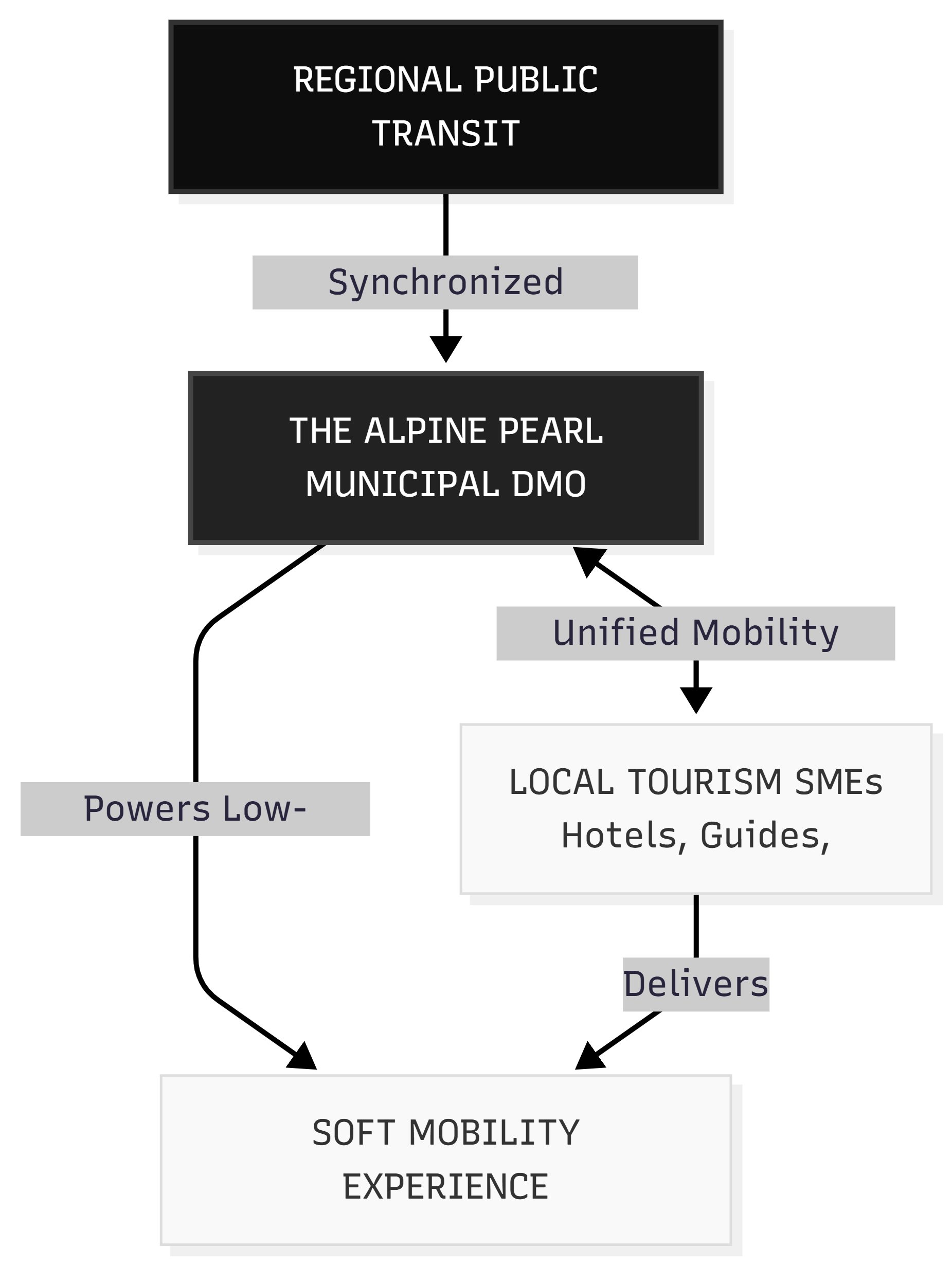
Operational Framework: From territorial resource discovery and supply-chain auditing to commercial circuit codification, local pricing syndication, and continuous economic yield retention.
1. Attractions: Spatial & Resource Auditing
Conducting rigorous spatial and resource audits to inventory tangible physical assets, biodiversity corridors, and intangible regional heritage, converting latent geographic capital into exclusive commercial product layers.
2. Accessibility: Connecting Wilderness & Regional Transport
Mapping zero-friction transit connections and regional dispersal corridors that link remote wilderness accommodation with local transportation, enabling high-value guests to navigate seamlessly.
3. Amenities: Local Food Systems & Crafts
Overhauling enterprise procurement to source authentic local food systems, agricultural provisions, and traditional crafts—elevating guest experience while halting supply chain leakages.
4. Accommodation: Regenerative Hospitality Architecture
Aligning boutique hotels, eco-lodges, and private community trusts with place-based architecture and low-impact operational standards that justify premium rate sovereignty.
5. Activities: Community-Led Guided Journeys
Curating immersive, guided excursions led directly by local naturalists and community custodians, delivering unforgettable traveler memories that distribute economic yield directly to residents.
Institutional Evidence & Standard: OECD & GSTC
“Empirical destination research published by the OECD Tourism Committee demonstrates that structured tourism product clustering yields up to 34% higher average daily expenditure and extends visitor dwell time by an average of 2.3 days. Furthermore, GSTC Destination Criteria (Criterion B4) explicitly benchmark economic viability against a destination’s capacity to engage MSMEs directly in value-added product development.”
— OECD Tourism Papers & Global Sustainable Tourism Council (GSTC), Destination Sustainability Framework & SME Performance Indicators.
Pillar 03 — The Advisory Advantage
Why Symbios Strategic: Macro-Level Rigor Built for MSME Agility
Traditionally, institutional methodologies—such as spatial carrying-capacity modeling, econometric diagnostics, and macro-destination blueprints—are exclusive assets deployed by national tourism ministries. Symbios Strategic was founded to democratize that imbalance. We adapt official UN Tourism frameworks into agile, field-ready commercial tools for localized private enterprises, giving them the structural leverage of a regional tourism board.

1. Institutional Standards, Commercial Agility
Our analytical engines adhere strictly to official UN Tourism standards, converted into lightweight commercial workflows that localized enterprises can deploy without heavy administrative overhead.
2. Halting Economic Leakage
We engineer supply-chain rails that channel guest spending directly into local culinary, craft, and guiding networks, transforming community pride into a defensible competitive moat.
3. Turnkey Field Implementation
We deliver actionable supplier agreements, operational protocols, product sheets, and circuit pricing structures designed for immediate market activation.
Institutional Evidence & Standard: World Travel & Tourism Council (WTTC)
“Research from the World Travel & Tourism Council indicates that destination strategies structured around regional value-chain integration retain up to 72% of visitor expenditure within local communities—compared to less than 20% under conventional, centralized mass-tourism configurations. Integrated product development is the single most potent lever for sustainable economic diversification.”
— World Travel & Tourism Council (WTTC), Economic Impact & Regenerative Value-Chain Report.
Ready to Engineer Your High-Yield Territorial Circuit?
Schedule an executive consultation to assess your enterprise’s latent assets, eliminate supply chain leakage, and deploy the UN Tourism Five A’s framework.